
What I stand for
‘Just Big Enough’- more than words
In 1964 while the vision for Snowmass was growing in the minds of the original developers, the Janss brothers, they sought balance.
And in an effort to seek symbiosis, Ed Janss reached out to Sam Francis, a contemporary and quite famous pop artist of the day, inviting him to come to Snowmass and give his thoughts on how the company should proceed.
After spending a month in rural mountains and ranching landscape of the valley we now call Snowmass Village,
he sent Ed Janss a very substantial bill for his time and gave a one-sentence recommendation:
to do “As little as possible.”
Later, Ed Janss famously acknowledged that the advice was “priceless.”
That advice influenced the first attempt at a version of a Snowmass Village Comprehensive Plan, the 1966 Janss Master Plan.
It was simple, and I feel it is a model upon which all iterations should continue to reflect. Here it is in its entirety:
• Nature should be the dominant feature on the landscape.
• The rural character of the Brush Creek Valley should be preserved.
• Villages should be small, distinct and quaint.
• A regional transit system should minimize car traffic and link to Aspen, which would remain "the dominant center" for business and commerce.

You may have some idea of where I stand on many issues after years of my printed words reporting the Snowmass news, co-creating the “Story of Snowmass” and as an informed opinion columnist for the Sun since 2015.
But I think the value I will bring to the table is a lifetime of perspective and a genuine desire to steward for our future (with a conscientious eye on the past) so that this incredible place can continue to prosper with mindful guidance.
I hope that future generations will one day love this place as much as I do.
I want our community to feel supported.
We need this incredible natural valley to continue to be protected, and I hope we can also continue to have immediate access to the wild spaces that we all love, while working hard to understand more about how to protect, support and maintain them.
I would like to see more resiliency built into our Town, and for Snowmass Village to be on the forefront of these issues.
I would like to support our next generation community members so that they feel a civic connection, and sense of community here as well. And to support our aging population so that they can comfortably live in the community that they themselves have helped to build.
I want the challenges of working hard to live here, making this place wonderful for our visitors, to come with more benefits and rewards.
I want local business needs to come first.
I want more access to local food.
I believe that just because we have the funding doesn’t mean we always need to keep building.
And I hope to be a discretionary voice guiding our principles of “Just Big Enough.”
I hope to maintain our genuine Village Character, that charm which draws both visitors and residents to this place, and has been understood since our inception to be one of our most valuable resources.
And I really want to encourage us all to have fun as we do our best to enjoy this journey together.
Sense of Community
What is sense of community? What creates a community? Why do humans congregate in such a unique way? The best definition I could find came from McMillan & Chavis’s Journal of Community Psychology: “Sense of community is a feeling that members have of belonging, a feeling that members matter to one another and to the group, and a shared faith that members’ needs will be met through their commitment to be together.”
Their work defines communities in terms of four guiding principles: “Membership, influence, integration and fulfillment of needs and shared emotional connection.”
For those who view Snowmass primarily through a marketing lens, we are simply an economic asset in a defined valley and, perhaps, an overlooked extension of Aspen Skiing Co. A manufactured resort, with no membership center — no heart. Yet, I know we have a heart. This valley pulses with nodes of emotional safety and pockets of trust. We may have lost our center, but the heart is still here, pumping away.
The second principle, “influence,” is that sense of relevance, which needs to flow both ways. If you have ever attended a council meeting, you can see that our residents feel they have a voice in this community, despite the ever-changing fits and starts of the powerful developers who have come and gone over the years. Likewise, this community certainly provides its members with benefits that they wouldn’t want to lose. At the epicenter is our environmental connections to these mountains and our shared passion for them. And we work, debate and, at times, argue hard to maintain that environmental emphasis.
The third principle involves the “integration and fulfillment of needs.” Essentially, when joining a community, members eventually receive benefits and are rewarded for participation.
It is true, that despite their physical address, many residents work, recreate and socialize in Aspen, using Snowmass for sleep and storage. Some are simply waiting for that opportunity to inch one-step closer to their more coveted ZIP code. On the other side, you will find those who work, play and connect here, considering these hillsides, trails, vistas and neighborhoods their community even while residing elsewhere out of necessity.
For those of us who call this place home — and mean it — we take some degree of offense when outsiders suggest that we are only a “resort.” We live for this valley, but also for each other. We want to cultivate businesses and raise our children here. We want to come together to celebrate things like a successful season’s end and also to support each other in times of need.
Finally, according to McMillan & Chavis, every community must have “shared emotional connection,” and this is believed to be the “definitive element for a true community.” Explaining that healthy communities have a story, members feel a sense of history through shared experiences, and they believe there will be more experiences to come.

Run this Litmus test:
Will it improve our aesthetics, openness or social offerings?
If not, should it be a priority?
I recently stumbled across a serendipitous study suitably named “Soul of the Community.” Focusing on the emotional connections between residents and their communities, this Gallup survey studied 26 mid-sized towns across the United States in three-year increments. The study has been conducted three times over the past two decades. The most recent findings, released in 2016, show a lasting trend helping to determine the factors that attach residents to their communities and identifying the role that community-attachment plays in an area’s economic growth and well-being.
This correlation supports the theory that if you are attached to a place, you will spend more time and money there, becoming more productive, involved and invested in that community.
The study identifies 10 domains that drive community attachment at varying levels:
Basic services: community infrastructure
Local Economy
Safety
Leadership and elected officials
Aesthetics: physical beauty and green spaces
Education systems
Social offerings – opportunities for social interaction and citizen caring
Openness
Civic involvement
Social capital – networks between residents
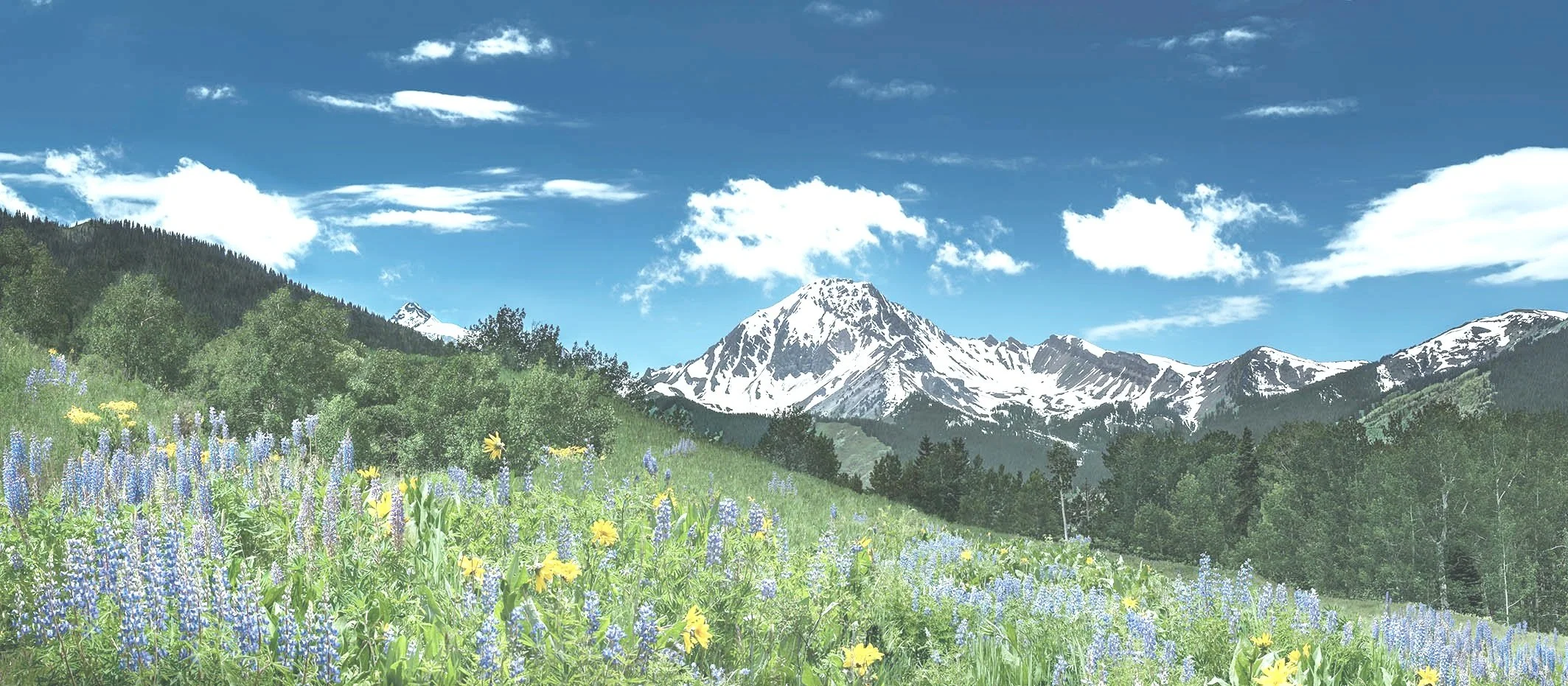
Consider rating these when selecting a place to which you might move or visit. Try it. You may assume the top-rated factors to be safety, education or economy. But ponder lifestyle and quality of daily life. Where would you really like to live and plant your roots? Consistent across all 26 cities surveyed and over 43,000 interviews the top of the list is aesthetics followed by openness and social offerings. These same top three also rank as No. 1, 2, and 3 in the 2010 study. If you read my column or know me personally, you know I do not shy away from advocating for aesthetics. To me, it’s about the colorful fall canvas of honeyed hillsides sparkling gold in the warm morning rays; the lustrous, wide-open, snow-covered meadows dancing with shadows at dusk. It’s the spring-green leaves quaking against an expansive deep-blue, midsummer sky, and the voluptuous mountain horizons that blur the lines between heaven and earth.
So while we consider public improvements based on how much they enhance the soul of our community. Run this Litmus test: Will it improve our aesthetics, openness or social offerings? If not, should they be a priority?